





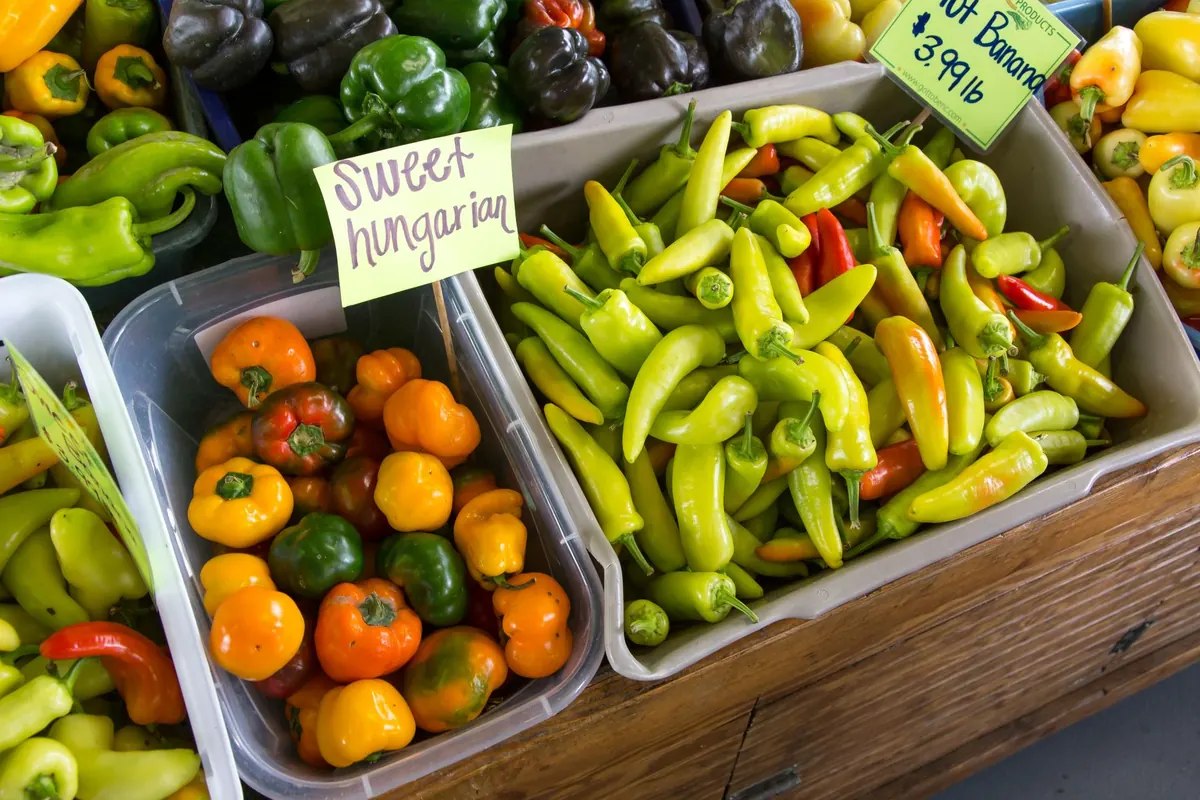
There's a moment at a good farmers market when you stop shopping from a list and start shopping from what's actually in front of you. The first flat of strawberries in June. Tomatoes that smell like tomatoes. A pile of squash in October that will feed you for a week.
Eating seasonally doesn't require a lifestyle overhaul. Mostly it means showing up with a rough plan and enough flexibility to change that plan when the tables offer something better. Here's a checklist that makes buying well easier, without letting the total creep past what you meant to spend.
Before You Go: Ten Minutes Well Spent
Check what you already have. The crisper drawer is where good intentions go to die: half a cabbage, three carrots, a wilting bunch of parsley. Plan one or two meals around those first, then buy to fill the gaps.
Decide on a number before you leave the house, and consider bringing it as cash. Handing over paper bills is a natural stopping point, and it keeps you from drifting. Most vendors now take cards and phone payments too, so cash isn't mandatory, just useful.
Write a loose list rather than a rigid one. Instead of "kale," write "one cooking green." Instead of "tomatoes," write "two pounds of whatever's ripest." That way the market can surprise you without wrecking the plan.
Finally, know your market's rhythm. Smaller weekday markets are often calmer than the Saturday crush, and some vendors sell different stock on different days. It takes one season to learn who has the best eggs and who grows the greens you actually like.
The Seasonal Checklist
Run through this as you walk. None of it is a rule, but the questions keep you from buying the same five things every week.
- One thing to eat raw this week. Lettuce, radishes, cucumbers, cherry tomatoes, snap peas. The stuff that's best barely touched.
- One thing that keeps. Winter squash, potatoes, onions, cabbage, carrots, apples. This is your buffer for the nights when cooking feels like too much.
- One bunch of herbs. A cheap bunch of parsley, dill, cilantro or basil carries more flavor per pound than almost anything else on the table.
- One thing to freeze or preserve. Berries, stone fruit, peppers, tomatoes, green beans. Buy these in quantity only when you know you'll have an hour to deal with them.
- One staple if your market has it. Eggs, cheese, bread, dried beans, honey. Often better value than the same item at a specialty shop.
- One experiment. Kohlrabi. Romanesco. Purslane. Celeriac. Pick something you've never cooked and ask how to cook it.
Four Questions Worth Asking at the Table
"When was this picked?" tells you how long it will keep. "What do you do with this?" gets you a real recipe from someone who has cooked it a hundred times. "Is there a better price on a larger quantity?" opens the door to a half-bushel of tomatoes or a full flat of berries for sauce and jam. And "do you have any seconds?" often turns up bruised peaches or misshapen peppers that are perfect for freezing, roasting or soup.
Read the Season, Not the Sign
What's cheap and good changes week to week. Broadly, spring means tender greens, radishes, peas, asparagus and spring onions, best eaten soon and bought modestly. Summer is the abundance: tomatoes, zucchini, cucumbers, peppers, eggplant, corn, berries, stone fruit. This is when you buy in volume and freeze the surplus.
Autumn brings apples, pears, squash, pumpkins, roots and brassicas, most of which hold for weeks, so buying a lot is low-risk. Winter thins out to storage crops and hardy greens, which is when cabbage, carrots, leeks, onions and potatoes earn their place. Your local calendar will differ from any list, so ask vendors what's coming next; growers know their own fields better than any chart.
Price-Smart Habits That Actually Work
- Walk the whole market once before buying. The same vegetable can be priced differently three stalls apart.
- Shop the last hour. Vendors would rather sell than pack up. Ask politely about a deal on what's left instead of assuming there is one.
- Split a case with someone. A whole box of tomatoes or apples divided between two households is usually better value per pound.
- Buy by weight where you can. A hefty bunch of untrimmed greens beats a washed, bagged, expensive handful.
- Don't fear the ugly ones. Cosmetic rejects cook exactly the same. Skip anything soft, sour-smelling or mouldy, though; a bargain you throw away is not a bargain.
- Skip the prepared food if your goal is groceries. The smoothie truck and the hot-food stalls are lovely, but the margin lives there and not in the produce.
- Bring your own bags. A couple of sturdy totes and a small cooler bag in the car protect delicate greens and berries on the way home.
On organic: if money is tight, don't feel you must buy only certified organic. Freshness and seasonality usually matter more, and a just-picked local vegetable beats a tired one that travelled a week to reach you. Buy organic when it fits the budget and you care about it, and buy local regardless.
Storing the Haul So Nothing Wilts
Don't wash berries until you're ready to eat them. Wash and thoroughly dry leafy greens, wrap them in a clean tea towel and keep them in a bag in the fridge. Stand herbs in a glass of water on the counter, or chop and freeze them in oil. Keep tomatoes on the counter, not in the fridge. Store onions, potatoes and squash cool, dark and dry, and keep onions away from potatoes so neither spoils faster.
For freezing, spread berries on a tray before bagging them so they don't clump, and blanch green vegetables briefly first. If you plan to can or preserve, follow a tested recipe from a recognised source rather than improvising; low-acid canning done wrong is a genuine health risk, and it isn't worth guessing at.
A Simple Two-Week Rhythm
Most people get the best results from a light weekly shop for fragile things, plus a bigger trip once or twice a month for anything you freeze or store. Keep a running note of what you actually cooked and what quietly rotted, and adjust. Within a season you'll know your market, your vendors and roughly what a fair price looks like for a pound of tomatoes.
If you have a medical condition or specific dietary needs, check with your doctor or a registered dietitian before making big changes to how you eat. And if a tight food budget is part of a wider financial squeeze, free help exists through community food programmes and nonprofit credit counsellors. Using it isn't a failure; it's just good planning.
Photo: Mark Stebnicki / Pexels